
After Mother's Day: What happens on the other 364 days
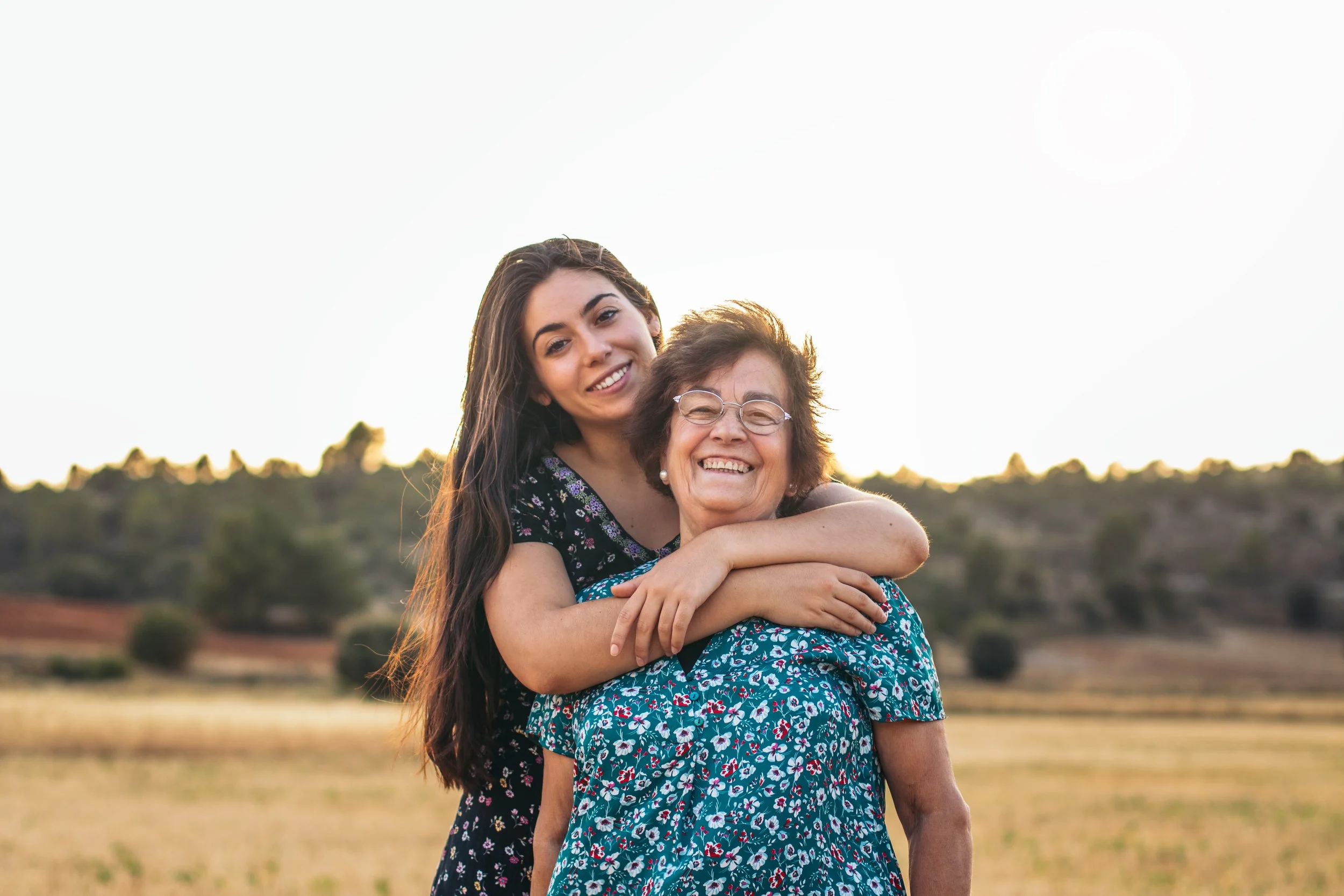
About the day we call—and the silence that follows. Stories of adult children who mean well but aren’t always there.
Mother's Day has a curious quality. It silences your guilty conscience for a day—and then amplifies it for all the days that follow.
You call, you send flowers, you might even plan a visit. And for a few hours, the distance feels smaller. Then Monday comes, the week begins, and life is loud and busy and fast-paced again. And somewhere in an apartment that’s quieter than your own, there’s someone for whom Mother’s Day is already over.
In Germany, one in three people over the age of 65 lives alone —about 5.9 million people, according to the Federal Statistical Office. Most of them have children. Most of these children love their parents dearly. And yet, what happens is something no one likes to talk about: the 364 days that follow are often much quieter than anyone intended.
This text is about these days. It’s about real people—anonymous, yet recognizable. And it’s about what you can do if you want to do better but aren’t quite sure how.
“Mother’s Daysilences your guilty conscience for a day—and then makes it even worse for the rest of the year.”
Katharina, 41: “I thought once a week would be enough”
Her mother lives in Freiburg. Katharina lives in Hamburg. It’s a four-hour train ride, so they can visit twice a year. Otherwise, they talk on the phone.
“I’ve established a routine. I always call on Sundays. I thought that was a good thing. It’s regular, and it shows her that I’m thinking of her.” She pauses. “Until my mom mentioned in passing that she doesn’t like Thursdays. I asked her why. And she said, ‘Thursdays feel so far away from Sundays.’”
Katharina isn’t telling this story to elicit sympathy. She’s telling it because she didn’t realize it. Because she thought that contact meant contact, and regular meant regular. “I never told her that I think about her all week long. And she never told me how long a week can feel when you don’t have much to do.”
What happened next: Katharina called on Thursdays. Just like that—briefly, nothing special. The third time, her mother said, “You never used to call on Thursdays when I was young,” and laughed. It was the first time in months that Katharina’s laughter hadn’t sounded forced.
Mehmet, 36: “She always says she’s fine”
His mother is 71. She lost her husband three years ago. She lives alone in the house where Mehmet grew up.
“I ask her every time. ‘How are you?’ And she says, ‘Fine.’ I ask, ‘What have you been up to?’ And she says, ‘Nothing much.’ And then she asks me how I’m doing, and actually prefers to talk about me.” He shakes his head. “For a long time, I thought she meant it. That she really was doing fine.”
At some point, he asked a different question. Not “How are you?”, but: “What was difficult this week?” Silence. Then: “The heater’s making a strange noise. And I didn’t sleep again. And last week was the anniversary of your father’s death, as you know.” He knew. He hadn’t thought of it.
“My mother protects me. She always has. I had to learn not to ask for what’s good, but for what’s real.”
“Don’task, ‘How are you?’ but rather, ‘What was difficult this week?’ Sometimes that breaks through the protective barrier behind which older parents shield their children.”
Lena, 44: “Mother’s Day was the only day she seemed to be waiting.”
Her mother is 74 and has been living alone since her husband passed away. She’s active, has neighbors, and goes for walks regularly. From the outside, there’s no problem.
“She’s the strongest person I know. She never complains. She never asks for anything. I always thought that was a sign she was doing well.” Lena pauses. “Until I called her last Mother’s Day and she picked up on the second ring. On the second ring. I remember how strange that seemed to me. She never answers that quickly.”
She had been holding the phone in her hand. Since that morning. She had known Lena would call—and had waited. Not angrily, not reproachfully. She had simply waited.
“I thought about that one image for a long time afterward. My mother, alone in her apartment, holding her cell phone. Not because she’s sick. Not because something happened. But because waiting was all that the day held for her.”
Lena hasn't had a set routine since then. But she has developed a new habit: Whenever she thinks of her mother—which happens several times a day—she sends her a short voice message. Usually nothing important. “I was just thinking of you. Let me know if you want to.” Her mother always gets back to her.
What can help on the other 364 days
These stories don’t end with a solution, because there isn’t a one-size-fits-all answer. But they reveal patterns that many people recognize—and small shifts that have made a difference.
Ask differently, not more often. “How are you?” invites the response “Fine.” “What was nice this week?” or “What’s been on your mind?” opens things up more. Older parents who want to spare their children sometimes need a question where sparing them isn’t an option.
Unannounced little things. A quick message, a photo, a voice note—not as a chore, but as a reflex. “I was just thinking of you” takes 20 seconds but feels like 20 minutes. It’s not the amount of contact that matters. It’s the feeling of being there.
Know the whole week, not just Sunday. If you know that Thursday is a long day, if you know that your father’s anniversary is in March, if you know that you had a doctor’s appointment on Tuesday—then you can just show up instead of calling. That’s the difference between contact and connection.
Don’t wait for signs. Most lonely elderly parents don’t show that they’re lonely. They put on a brave face. They’d rather ask about the children. They say, “I’m fine.” Waiting for a clear sign is a risky game.
Ask practical questions. “Is everything okay with the heating? Is there anything that’s become more difficult?”—not as a way to check up on them, but as an invitation. Sometimes, practical answers hide emotional realities.
Mother's Day is a good occasion. It is no substitute for the other 364 days. And it does not relieve the burden of those days.
What it can be: a moment when you decide what this Thursday will be like. And the next one. And the one after that.
Not because you have to. But because someone you love might be holding a cell phone.
References
Federal Statistical Office (Destatis). (2021). Nearly 6 million older adults live alone. Press release for the International Day of Older Persons, September 29, 2021.
Federal Statistical Office (Destatis). (2025). 17 million people in Germany live alone. Preliminary results of the 2024 Microcensus.
Robert Koch Institute (RKI). (2022/2023). Prevalence of loneliness among older adults in Germany. Journal of Health Monitoring, 3/2023.
Malteser Germany. (2021). Forsa Survey: Life and Loneliness in Old Age – Results of a Survey of People Over 75.
