
A day with a digital companion
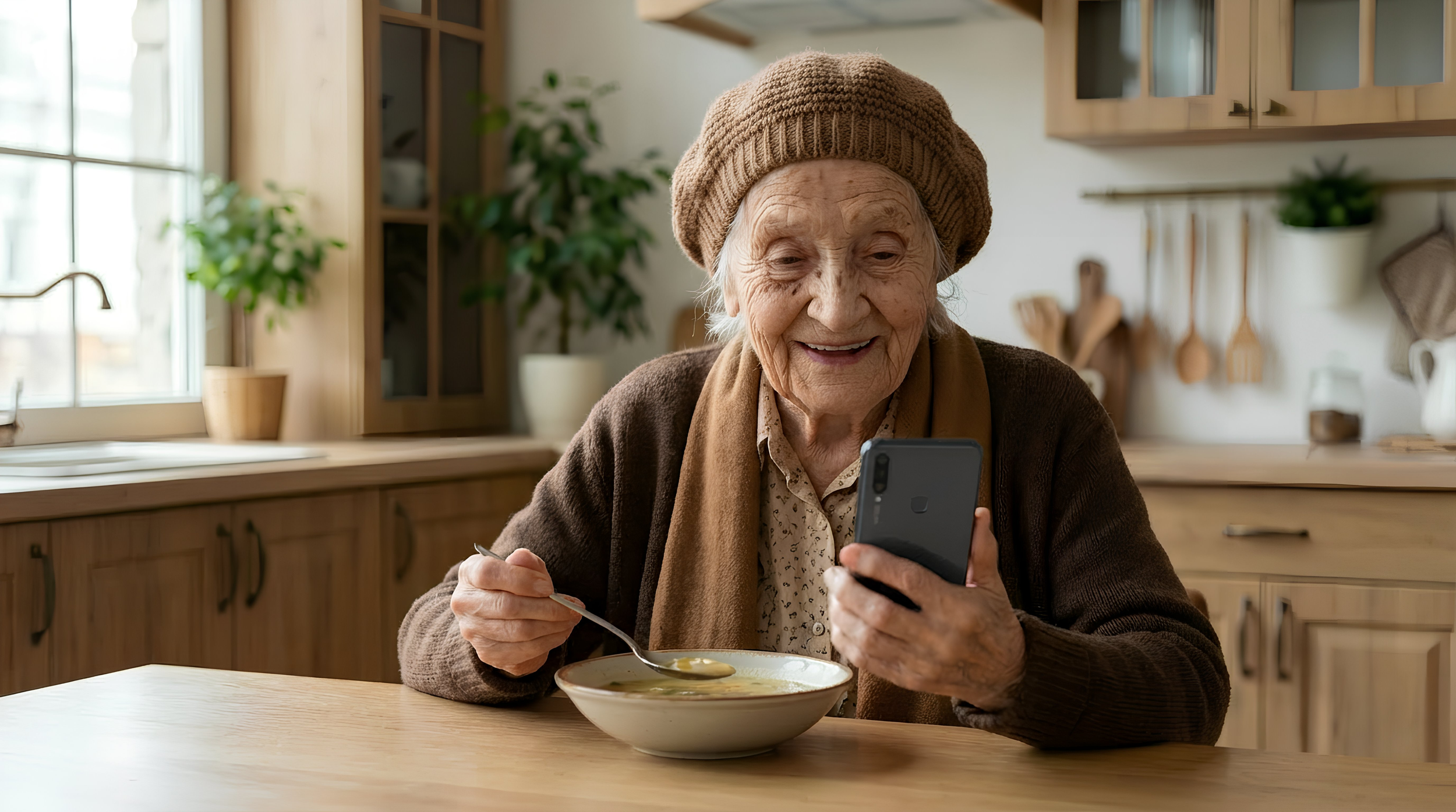
How an AI companion supports older people from morning to night
What does it actually feel like in everyday life when a digital companion becomes part of your life?
Not technically, not abstractly—but in the real daily rhythm of an older person?
An AI companion doesn't change the world overnight.
But it does change the moments that make up the world:
Morning, noon, afternoon, evening.
Piece by piece. Word by word. Connection by connection.
Here is an example of what such a day might look like.
Mornings: Start the day well
The day begins with a familiar voice: "Good morning. How did you sleep?"
Not as a routine, but as a genuine arrival.
The Companion reads out the weather, helps with the daily overview, reminds you to take your medication, assists with orientation, and motivates you to make small movements:
light stretching exercises
a short walk
drink a glass of water
A calm start that provides stability.
Noon: Activity, joy, and mental stimulation
As the day progresses, the Companion provides new inspiration:
Suggestions for lunch
favorite music
short stories, memories, or anecdotes
Mind games that activate the brain
None of it feels like "training."
It's everyday support—light, warm, human.
Afternoons: Close to family, even from a distance
A grandchild leaves a voice message: "Grandma, I love you!"
The Companion plays it back and asks, "Would you like to reply?"
A dialogue that connects generations—without complicated technology, without barriers.
Evenings: Reflection, orientation, and safety
Before the day ends, the Companion helps you unwind:
Read news or favorite articles aloud
summarize the day
Remind you of appointments ("You have physical therapy tomorrow at 10 a.m.")
find comforting words
A conclusion that provides structure and calm.
For families: closeness without interference
An AI companion not only supports older adults—it also takes the pressure off families.
Not through control, but through trust.
Parents and children receive small, reassuring signals:
"Mom was in a good mood today."
"Dad has taken his medicine."
"Grandma spoke to you today."
No interference with independence.
No monitoring.
Just the certainty that everything is fine.
It's a new form of closeness—one that doesn't demand, but strengthens.
What this everyday life shows
The Companion does not replace anyone.
It creates space for connection, orientation, and joy—precisely where loneliness and insecurity often begin.
A voice that is there.
Support that strengthens.
Everyday life that becomes easier.
This is what a day with AMARA feels like: humane, dignified, connected
